
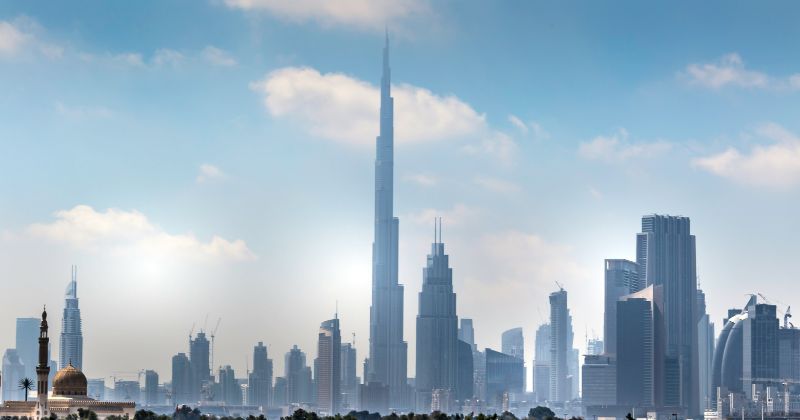
Periods of geopolitical tension often trigger a predictable reaction among investors: hesitation, caution, and in some cases withdrawal. Yet, in the Middle East, a different dynamic is currently unfolding. Despite ongoing tensions affecting regional stability and concerns surrounding strategic routes such as the Strait of Hormuz, Dubai continues to attract foreign entrepreneurs, investors, and multinational operators at a sustained pace.
The explanation is simple. In uncertain environments, capital does not disappear—it relocates. And increasingly, it relocates toward jurisdictions that offer predictability, efficiency, and long-term strategic value. The United Arab Emirates has spent decades positioning itself precisely as such a jurisdiction, and that positioning is now proving its resilience.
Dubai, in particular, has evolved into a business environment that is largely insulated from short-term geopolitical fluctuations. Its infrastructure, regulatory clarity, and institutional continuity have created a framework where commercial activity can continue uninterrupted. This is not theoretical. Company incorporations are ongoing, residence visas continue to be issued and even relaxed (As of April 2026, the Dubai Land Department has removed the AED 750,000 minimum property value requirement for the 2-year investor visa for sole property owners. This enables investors to qualify for residency regardless of the property’s price, provided they own it outright, though joint owners must now hold a minimum share of AED 400,000; no change on the 10 years- Golden Visa at AED 2 mil), and foreign capital inflows remain steady. In practice, many investors view the UAE not as part of the risk equation, but as a solution to it.
One of the most decisive factors behind this continued attractiveness is the tax environment. The UAE offers a structure that remains highly competitive on a global scale. Personal income is not taxed, and corporate taxation—now formally introduced at a rate of 9% — remains significantly lower than in most developed economies. In certain free zone structures, companies can still benefit from a 0% corporate tax rate, subject to regulatory conditions. There are no withholding tax on dividends or capital gains compared to Europe (20–30% corporate tax) or the United States (21% federal + state taxes). For investors accustomed to European or North American tax burdens, this represents not merely an advantage but a structural shift in how business can be operated and scaled.
Equally important is the ease with which companies can be established and brought to operational status. The UAE has streamlined its incorporation processes to a degree that few jurisdictions can match. What would typically require months of administrative procedures elsewhere can often be completed in a matter of days or weeks. This speed is not only a matter of convenience; it directly affects business agility, allowing entrepreneurs to respond quickly to market opportunities and to restructure operations without friction.
Banking, often a critical bottleneck in international structuring, remains relatively accessible in the UAE. While global compliance standards have undeniably tightened, Dubai continues to offer a level of access that is increasingly rare in Europe and parts of Asia. International banks are present, onboarding processes are becoming more sophisticated rather than restrictive, and multi-currency capabilities remain standard. For many international clients, the ability to open and operate a functional corporate bank account is a decisive factor—and one that the UAE still delivers.
Beyond its domestic advantages, the UAE’s true strength lies in its position as a gateway. From Dubai, businesses can effectively access markets across the Gulf Cooperation Council, Africa, South Asia, and beyond. The city’s logistics infrastructure, combined with its connectivity, makes it a natural hub for regional operations. This is not simply about geography; it is about positioning a business within a network that facilitates expansion and diversification.
The local market itself also plays a role. With a population composed predominantly of expatriates and ambitious growth rate, the UAE offers a uniquely international consumer base. Demand spans a wide range of sectors, from luxury goods and real estate to professional services and technology. This creates opportunities not only for companies targeting global markets but also for those seeking to establish a strong regional presence.
Another important dimension is the link between business and residency. Incorporating a company in the UAE is not merely a commercial decision; it can also serve as a pathway to residency. This provides investors and entrepreneurs with a degree of personal mobility and stability that is increasingly valuable in a fragmented global environment. The ability to live, operate, and structure assets from a single jurisdiction is a powerful incentive.
When considering how to structure a business presence in the UAE, foreign investors typically choose between three main approaches, each serving a distinct purpose:
1/ Free zone companies are often the preferred option for international operations, offering full foreign ownership, simplified procedures, and tax efficiency.
2/ Mainland companies, by contrast, provide direct access to the UAE domestic market and are suitable for businesses intending to operate locally or contract with government entities.
3/ Offshore structures, while not designed for operational activities within the UAE, remain highly effective for holding assets and managing international investments.
What is particularly noteworthy is that the current environment, rather than discouraging investment, may actually enhance the UAE’s relative attractiveness. As other jurisdictions become more restrictive, more heavily taxed, or administratively complex, Dubai continues to present itself as open, adaptable, and business-oriented. This divergence creates opportunities for those willing to act decisively.
In that sense, timing is not a constraint but an advantage. Investors who establish a presence in the UAE today are positioning themselves ahead of the next cycle of growth, benefiting from both the jurisdiction’s inherent strengths and the shifting dynamics of global capital flows.
Ultimately, the UAE has demonstrated that it is not merely a regional hub, but a global platform for business and investment. Its appeal does not depend on the absence of geopolitical tension; rather, it is reinforced by it. In a world where uncertainty is becoming the norm, the ability to rely on a stable, efficient, and strategically located jurisdiction is no longer optional—it is essential.
For foreign investors and entrepreneurs, the conclusion is increasingly clear: the fundamentals that have driven the UAE’s rise remain intact, and in many respects, they have never been more relevant.
International Expansion Roadmap: Learn the 9 essential stages of international business expansion, from market selection and company formation to banking,...
Read MoreIn Part 1 of this series, we examined the emergence of citizenship by merit and why governments are increasingly reconsidering...
Read MoreChoosing a residency program involves more than taxes. Compare political stability, banking, healthcare, education, legal certainty, and family planning before...
Read More